
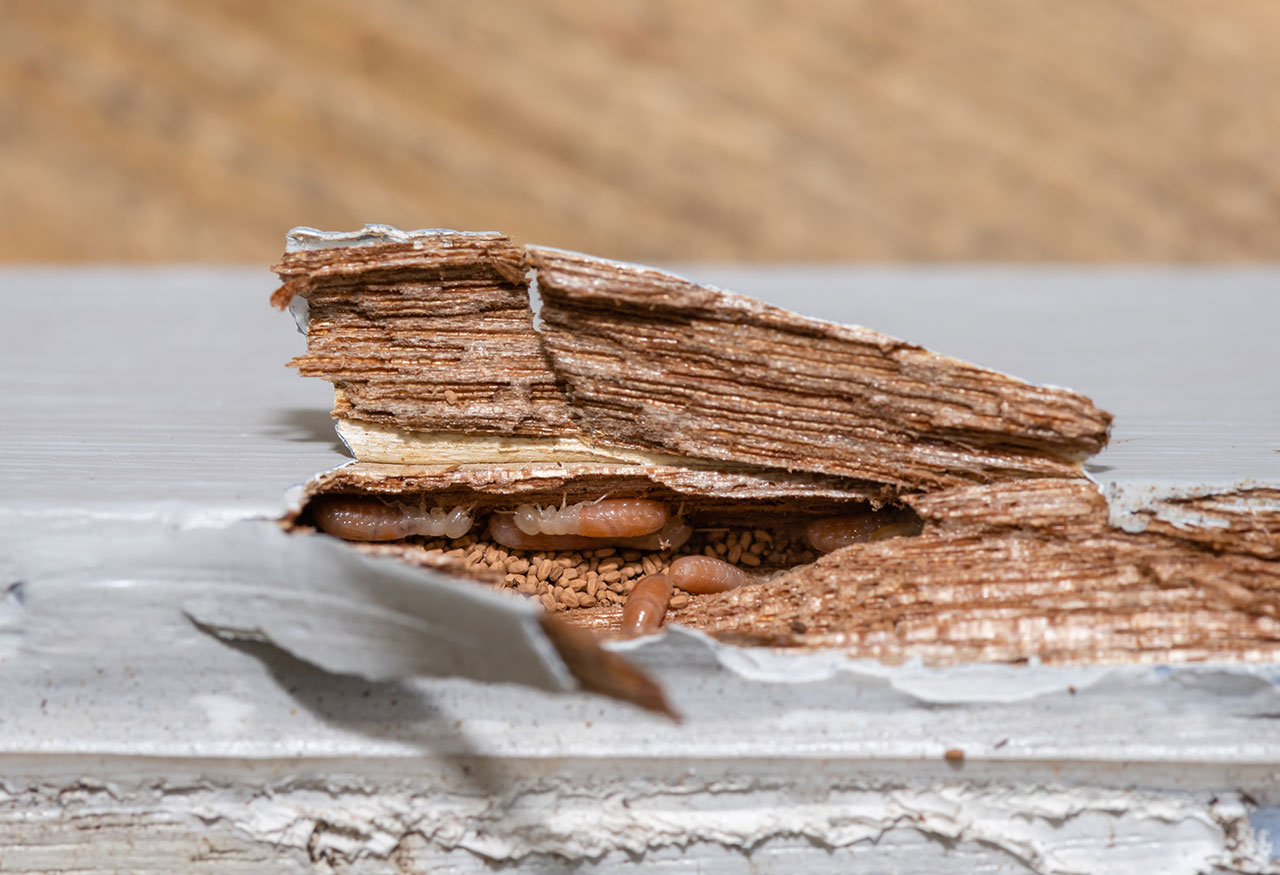
Termites Are “Normal” in Arizona—Structural Damage Isn’t: How to Spot, Prevent, and Respond
Termites are common in Arizona, and the damage often happens from the inside out—meaning wood can look fine until it isn’t. The top homeowner-visible warning signs are mud/shelter tubes, swarming winged termites, and wood that sounds hollow or looks blistered/sunken. If you see any of those, schedule a professional inspection quickly.
Arizona’s “big two” termite categories from Sexton Pest Control:
- Desert subterranean termites (often tied to moisture/soil contact pathways)
- Western drywood termites (can infest dry wood not in contact with soil)
Both can cause real structural issues—just with different clues.
What termite damage looks like in real homes
Termite damage isn’t always obvious because termites commonly eat wood from within. That’s why these clues matter:
1) Mud tubes (aka shelter tubes)
These are pencil-ish lines of packed material that help subterranean termites travel while staying protected. Sexton even breaks down multiple tube types (working/exploratory/drop/swarm).
2) Blistered or sunken wood / “hollow” sound
University extension guidance notes wood damage indicators like blisters or dark sunken areas, and other resources commonly reference hollow-sounding wood as a red flag worth checking.
3) Swarms + discarded wings
Winged termites (“swarmers”) inside the home or piles of wings near windows are classic “don’t ignore this” signals.
The Termite Risk Map: where to look first
If you’re a homeowner, realtor, or property manager, start here:
- Top inspection zones
- Garage corners and expansion joints
- Stem walls/foundation perimeter
- Around plumbing penetrations
- Baseboards near moisture sources
- Fence posts, dead tree limbs, exterior wood features (drywood hotspots)
Prevention in Arizona (what actually helps)
- Keep moisture controlled: fix leaks, avoid constant damp zones near the perimeter.
- Keep wood and cellulose away from soil contact where possible.
- Don’t store wood debris against the house.
- Consider professional prevention/treatment options—especially because Arizona guidance notes that pre/during construction termite treatments must be done by licensed pros.
If you want certainty (especially with property sales), a termite inspection from a local team that understands Arizona termite types is the cleanest next step. Sexton explicitly highlights Arizona termite expertise and offers termite programs/warranties, plus state-certified inspectors.
What are the most common termites in Arizona?
Desert subterranean termites and western drywood termites are commonly referenced in Arizona home contexts.
What’s the #1 sign of termites in Arizona homes?
Mud/shelter tubes are one of the most commonly visible signs for subterranean termites.
Can termite damage be hidden?
Yes, termites often feed inside wood, so visible surfaces can look normal until damage becomes advanced.