
Ants vs Termites in Arizona: The Pre-Close Checklist Realtors & Property Managers Should Use (Phoenix, Prescott, Flagstaff)
The 60-second answer
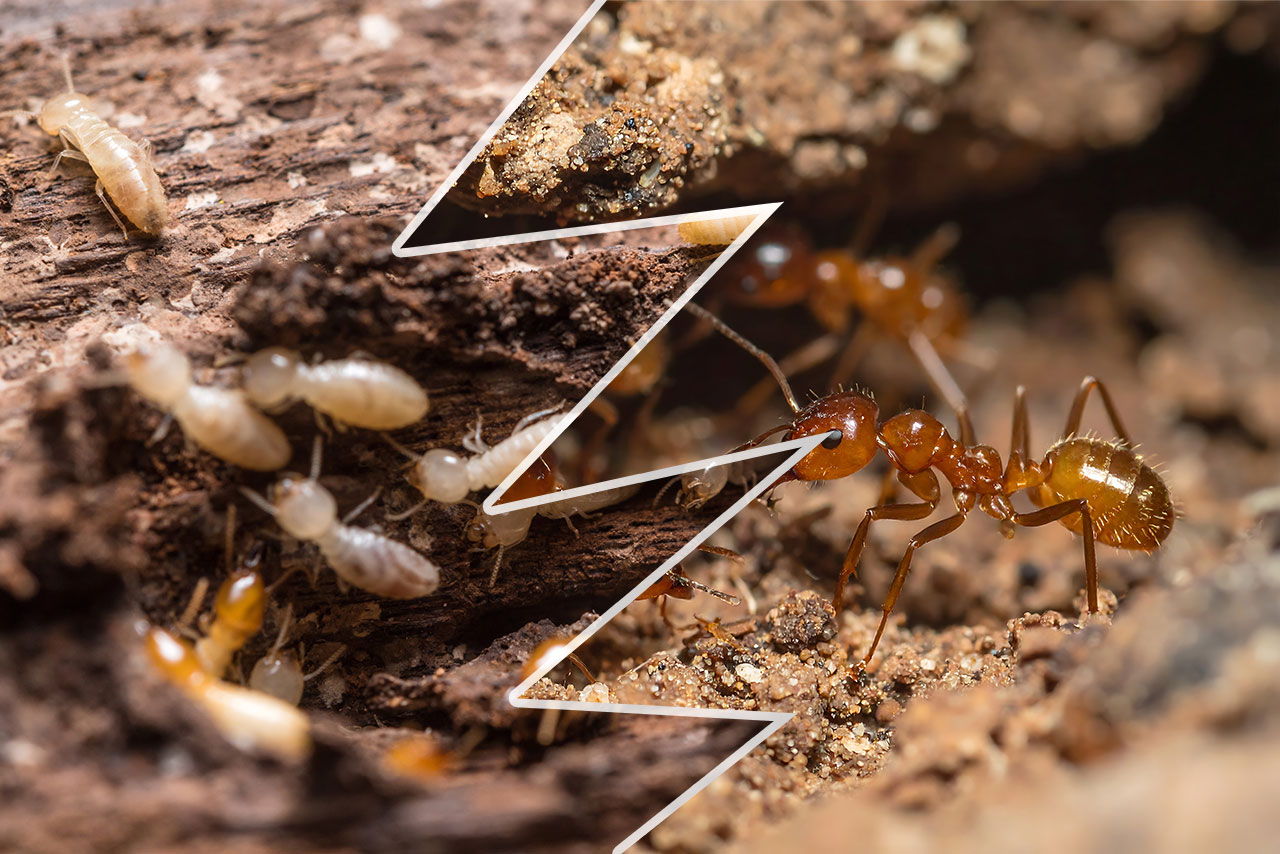
If you see “flying ants” around a property, don’t assume they’re harmless. The quickest way to tell ants vs termite swarmers is to check three features:
- Antennae: ants are elbowed; termites are straight/beadlike.
- Waist: ants have a pinched waist; termites have a broad, straight waist.
- Wings: ants usually have unequal wing lengths (front wings longer); termites have two pairs of equal-length wings.
Why it matters: termites can cause costly structural damage, and missing early signs before close can create major post-close disputes.
Why this matters for closings and turns
For realtors and property managers, “ants vs termites” is a high-impact distinction because it affects:
- Repair risk (termite damage can be structural)
- Inspection urgency (termite signs should be documented and evaluated quickly)
- Resident trust (“we saw swarmers right after move-in”)
University of Arizona Extension notes termite swarmers are called “equal-winged” (two pairs of equal-length wings), which is a key ID clue.
The simplest visual ID table
Look at the insect (or a photo) and check these:
- Antennae
- Ants: elbowed/bent
- Termites: straight/beadlike
- Waist
- Ants: pinched
- Termites: thick/straight
- Wings
- Ants: front wings longer than back wings
- Termites: both pairs equal length
The Pre-Close “Swarmers” Checklist
Step 1: Capture proof (2 minutes)
- Take clear photos (top-down + side)
- Capture one specimen in a clear bag/container if possible (without smearing wings)
Step 2: Inspect common “swarm” zones (5 minutes)
- Window sills and tracks
- Sliding doors
- Bathroom windows (humidity)
- Garage windows/door frames
- Light fixtures (swarmers are often attracted to light)
Step 3: Look for termite-specific property clues (7 minutes)
- Mud/shelter tubes along foundation/stem walls, plumbing penetrations, garage corners
- Discarded wings near windows (common after termite swarms)
- Wood that appears blistered, weakened, or compromised (document and refer)
Step 4: Decision rule (simple)
- If the insect shows straight antennae + thick waist + equal wings = treat as termite-suspect and recommend inspection ASAP.
If it shows elbowed antennae + pinched waist + unequal wings = likely winged ants, but still note conditions (moisture, nesting sources) and address attractants.
“What month do swarmers show up in Arizona?”
Swarming can vary by species and conditions (rain, heat, humidity). The practical pre-close rule is: if you see swarmers indoors at any time, document and identify immediately, because the cost of misidentifying termites is high.
If your team handles multiple closings or turns, a simple standardized protocol helps: (1) photo documentation, (2) quick ID using wings/waist/antennae, (3) inspection referral when termite-suspect. A local provider that can handle both ant and termite evaluations year-round reduces last-minute surprises and post-close disputes.
FAQ
Q: What are the 3 quickest ways to tell flying ants vs termites?
A: Check antennae (ants elbowed, termites straight), waist (ants pinched, termites broad), and wings (ants uneven, termites equal length).
Q: If I see wings near a window, is it always termites?
A: Not always, but discarded wings near windows are a classic “investigate now” signal—use the ID features and look for termite clues like mud tubes.