Ants in Arizona: What Realtors & Property Managers Should Flag Before Close (Phoenix, Prescott, Flagstaff)
The 60-second answer
In Arizona, ant problems are usually predictable, and preventable. Most issues come from (1) food + moisture drawing ants indoors (kitchens, baths, laundry rooms), or (2) an exterior colony using the structure as a foraging route. For realtors and property managers, the best “no surprises” move is to identify the ant type, remove attractants, and treat the colony, not just the visible trail. Sexton specifically stresses proactive prevention and colony-focused elimination approaches rather than short-term DIY fixes.
Why ants are a real estate / PM problem in Arizona
Ants can derail resident satisfaction fast because they show up at high-friction moments: inspections, final walkthroughs, move-in week, and after landscape/irrigation changes. A quick spray can reduce activity temporarily, but if the colony stays active, the trails come back, generating repeated tickets and reputational hits (especially in rentals and short-term stays).
The Arizona ant types that matter most in listings and rentals
1) Carpenter ants (wood nesting + moisture correlation)
Carpenter ants can nest in wood, often where moisture has already created soft or compromised areas. University extension guidance notes carpenter ants can nest in wood features and may leave sawdust-like frass near nest openings.
Realtor/PM takeaway: If you see frass, moisture damage, or persistent large ants at night, recommend a targeted inspection,not a guess.
2) Fire ants (stings + safety concerns)
Fire ants are a property-management headache because stings can become a safety and resident-experience issue,especially near dog runs, playgrounds, mail kiosks, and landscaped common areas. (Severe reactions can occur for some individuals.)
Realtor/PM takeaway: If there’s any evidence of stinging ants in common areas, it’s worth addressing before occupancy.
3) Nuisance “trail” ants (highest complaint volume)
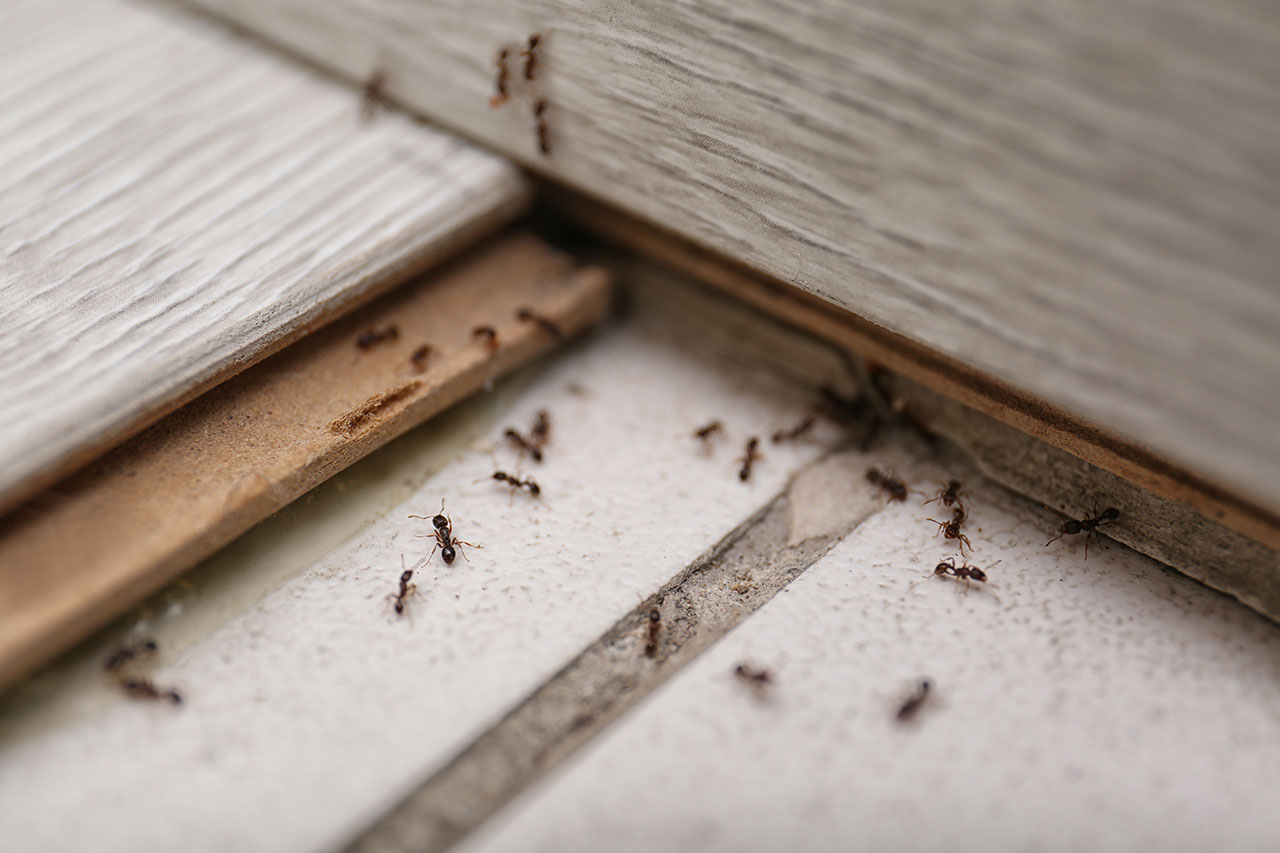
These are the pantry and kitchen invaders. They’re usually driven by crumbs/food storage practices and moisture pockets. If you only kill the visible ants, you often don’t stop the colony.
What ants can cause (beyond “annoying”)
Safety & resident experience
- Stings (notably with fire ants) can create resident concerns and repeat complaints.
- Kitchen/pantry invasions can damage reviews and trust in rental readiness.
Property impact
- Carpenter ant nesting can require repairs when colonies expand inside wood components,especially where moisture is present.
The shareable Pre-Close Ant Checklist
Use this during showings, inspections, and turns. It’s written to be linkable by agents, inspectors, HOAs, and PM blogs.
A) Interior scan (3 minutes)
- Look for trails: under sinks, around toilets, laundry hookups, water heater closets
- Check pantry corners and under/behind appliances
- Inspect for moisture (swollen cabinet bases, leaks, staining)
- Ask: “Do you see ants mostly at night?” (can align with carpenter ant patterns)
B) Exterior scan (5 minutes)
- Inspect: hose bibs, irrigation boxes/lines, AC condensation drain zones
- Check pavers/flagstone edges and landscape rock lines (nesting hotspots)
- Look for stored firewood/wood debris near the structure (carpenter ant risk)
- Identify any mound activity near common areas (potential stinging ant issue)
C) Decision rule (simple, defensible)
- Trail + moisture evidence: fix moisture and address the colony source (don’t just wipe the trail).
- Stinging ant evidence near high-traffic areas: prioritize control before occupancy.
- Frass / suspected wood nesting: recommend inspection + targeted plan.
Why DIY sprays often fail
Spraying the visible trail often doesn’t eliminate the colony. Ant problems are usually solved when the colony’s food/water access and nesting route are addressed,not just the workers you see.
If you manage multiple doors or handle frequent closings, the goal is a repeatable process that prevents move-in surprises. A quick inspection plus a targeted plan (especially for recurring properties) is usually the most cost-effective way to reduce tickets and protect resident experience year-round.
FAQ
Q: What’s the fastest way to reduce ant complaints after move-in?
A: Remove food/water attractants, correct moisture, then address the colony source, not just the visible trail.
Q: What’s the biggest ant red flag during a showing or inspection?
A: Evidence of stinging ants in common areas and carpenter ant signs like frass near wood components or moisture-damaged zones.